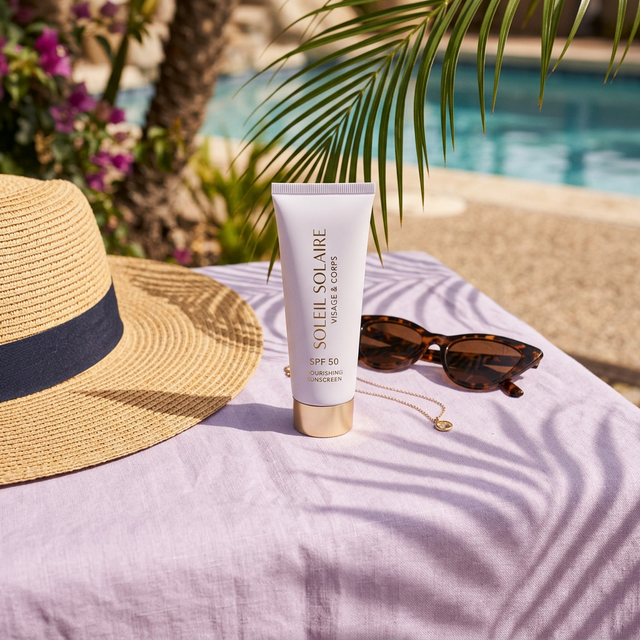
Understanding SPF: Your Complete Sun Protection Guide
Sunscreen is the single most important skincare product you can use. It prevents sunburn, slows photoageing, reduces hyperpigmentation, and lowers the risk of skin cancer. Yet it's the most misunderstood — and most frequently skipped — step in most people's routines.
Let's clear up the confusion.
What Does SPF Actually Mean?
SPF stands for Sun Protection Factor. It measures how much UVB radiation (the type that causes sunburn) is blocked relative to unprotected skin.
Here's the key insight: SPF is not a linear scale. The difference between SPF 30 and SPF 50 is smaller than you think:
- SPF 15 blocks ~93% of UVB rays
- SPF 30 blocks ~97% of UVB rays
- SPF 50 blocks ~98% of UVB rays
- SPF 100 blocks ~99% of UVB rays
The jump from SPF 30 to SPF 50 is only 1% more protection. What matters far more than SPF number is how much you apply and how often you reapply.
DermLens AI Tip: SPF 30 is the minimum recommended by dermatologists for daily use. SPF 50 is ideal if you spend extended time outdoors, live in a sunny climate, or have fair skin.
UVA vs UVB: Know the Difference
UV radiation from the sun comes in two types that reach your skin:
UVB Rays
These are the "burning" rays. They affect the outer layer of skin (epidermis) and are the primary cause of sunburn. SPF specifically measures UVB protection. UVB intensity varies by season, altitude, and time of day.
UVA Rays
These are the "ageing" rays. They penetrate deeper into the dermis and are responsible for premature wrinkles, age spots, and loss of elasticity. UVA rays are present year-round, pass through clouds and glass, and account for ~95% of UV radiation reaching Earth's surface.
For true protection, you need a broad-spectrum sunscreen that covers both UVA and UVB. Look for "broad spectrum" on the label, or a PA rating (PA+++ or PA++++).
Chemical vs Mineral Sunscreen
Chemical (Organic) Sunscreens
These absorb UV rays and convert them to heat, which your skin then releases. Common active ingredients include avobenzone, oxybenzone, homosalate, and octisalate.
- Pros: lightweight, sheer, cosmetically elegant, no white cast
- Cons: can irritate sensitive skin, some concerns about reef safety, may take 15–20 minutes to become effective
Mineral (Physical) Sunscreens
These sit on top of the skin and reflect/scatter UV rays. The two mineral filters are zinc oxide and titanium dioxide.
- Pros: immediate protection (no wait time), gentle on sensitive skin, reef-friendly
- Cons: can leave a white cast (especially on darker skin tones), may feel thicker
DermLens AI Tip: Modern mineral sunscreens have come a long way. Look for "micronised" or "nano" zinc oxide formulations — they're much more cosmetically elegant and minimize white cast significantly.
How Much Sunscreen Should You Apply?
This is where most people fall short. Studies show the average person applies only 25–50% of the recommended amount, which drastically reduces the actual SPF.
The correct amount for your face and neck:
- Two finger lengths — squeeze a line of sunscreen along your index and middle finger. That's roughly 1/4 teaspoon or about 1.25ml
- Don't forget: ears, back of neck, hairline, under the chin, and eyelids
How Often to Reapply
- Every 2 hours when outdoors
- Immediately after swimming, sweating, or towelling off
- Once midday if working indoors near windows (UVA penetrates glass)
Using a powder SPF or SPF mist makes midday reapplication over makeup much easier.
Choosing SPF for Your Skin Type
- Oily/acne-prone: lightweight, matte-finish chemical SPF. Look for "oil-free" and "non-comedogenic"
- Dry: hydrating SPF with added hyaluronic acid, glycerin, or ceramides
- Sensitive/rosacea: mineral-only SPF with zinc oxide. Avoid fragrance and alcohol
- Dark skin tones: choose tinted mineral SPFs or sheer chemical formulas to avoid white cast
SPF in Makeup: Is It Enough?
Short answer: no. Foundation or moisturiser with SPF 15–30 is a nice bonus, but you'd need to apply an unrealistic amount (about 7 times the normal foundation amount) to get the labelled SPF. Always apply a dedicated sunscreen underneath.
The Bottom Line
Sunscreen is the most impactful anti-ageing product available. The best sunscreen is the one you'll actually wear every day. Find a formula you enjoy using — one that feels good, looks good, and fits into your routine — and you've made the single best investment in your skin's future health.
Related Articles
Discover what your skin needs
Get a free AI skin analysis with personalised product recommendations, including SPF.
Try DermLens AI